

WCOS2027 Welcome page
Select Lectures — Call for Submissions page
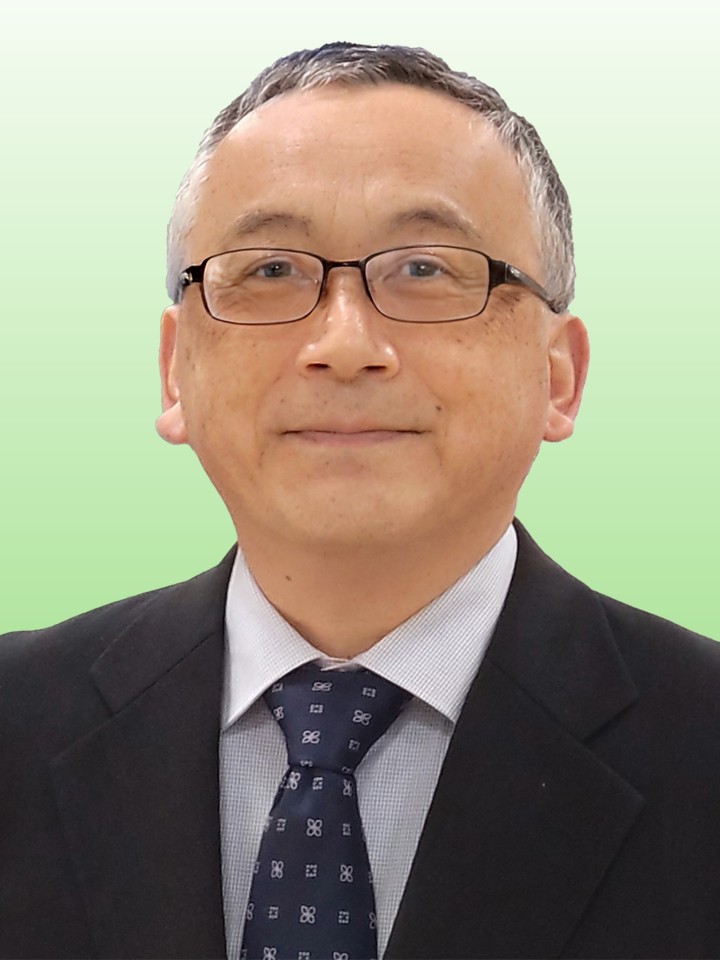
Professor, Tokyo University of Marine Science and Technology
Jan 2026
New Year’s Greeting from the President, 2026: Connecting the Future of Oleo Science through Industry–Academia–Government Collaboration
Happy New Year. I hope all our members welcomed the new year in good health and spirit.
Last year, the 63rd Annual Meeting of the Japan Oil Chemists’ Society (JOCS) was successfully held at Shinshu University under the leadership of Professor Toshiro Sakai. Many members and colleagues from both academia and industry, from Japan and abroad, joined us. The number of participants, as well as attendees at the social gathering, reached record highs. I would like to express my sincere gratitude to everyone who contributed to this great success. Personally, I was very encouraged by the enthusiasm and expectations for the future of oleo science that I felt through direct discussions with many participants at the venue. I hope we can carry this positive energy into this year’s annual meeting, which will be hosted by Professor Satoshi Ueno at Hiroshima University.
This year again, JOCS will emphasize “academia industry collaboration,” which has been our main theme in recent years. A unique strength of our society is the open exchange between academia and industry, from
basic to applied research. By making full use of this strength, we aim to bring research results into society, promote new technological development, and nurture the next generation of young researchers.
Looking ahead, the World Congress on Oleo Science (WCOS) will be held next year in Hakodate, hosted by Professor Masashi Hosokawa of Hokkaido University. This id an excellent opportunity for Japan to further
enhance its international presence in the oleo science field. We are currently working with many companies to prepare for this event, aiming to build a strong foundation for world-class research outcomes and human resource development. I also hope to include collaboration with the local community and regional resources in Hakodate as we move forward with preparations.
Another highlight is the steady growth of our journal, the Journal of Oleo Science (JOS). Its impact factor reached 1.8 in 2025, now exceeding that of related journals published by domestic societies and comparable to international journals in this field. This year, we aim for an impact factor of 3.0. I kindly ask all members to make active use of JOS in your research and development activities, and to cite JOS papers in your work. By doing so, we can further enhance the value of JOS, and showcase our progress to the world through WCOS, which I believe will greatly strengthen JOCS’s international standing.
At the same time, we must also improve the research environment. In recent years, researchers have faced difficulties such as increased administrative work, reduced funding, and aging equipment, which make it hard to fully concentrate on creative research. JOCS will continue to support young researchers by helping create an environment where they can pursue original ideas and long-term studies. We are also revising the textbook for the Freshman Seminar to make it more effective for learning basic knowledge, while inspiring interest in oleo science and supporting future researcher development. I am confident that such educational activities, carried out in cooperation among industry, academia, and government, will contribute directly to creating social value in our field.
In 2026, together with all members, we will continue to work with researchers, industries, and communities both in Japan and abroad, to further advance the Japan Oil Chemists’ Society. By strengthening our network across industry, academia, and government, we aim to become a society that contributes to solving the challenges of the future. I sincerely ask for your continued support and cooperation, and I extend my
best wishes to you for the new year.
May 2025
Greeting as the Newly Appointed President
I am Naohiro Gotoh and have been appointed as the President of the Japan Oil Chemists’ Society (JOCS) for the years 2025 and 2026 at the 71st General Meeting. It is a great honor to take on this important role, following President Okano, in a society with such a rich history and tradition. At the same time, I deeply feel the weight of this responsibility. I would also like to express my sincere gratitude to all the past leaders who have dedicated their efforts to supporting this society.
JOCS has long served as a place where researchers and engineers in the fields of oils, fats, surfactants, and related areas can exchange knowledge and create new values. It has contributed to the development of both academic and industry. While carrying on this tradition and foundation, during my term, I will make it my top priority to address the issues that became evident through my work with former President Okano and will work to promote our activities accordingly.
First, I aim to reorganize and update oil chemistry data from the year 2000 onward and make these findings widely available through the JOCS website or in printed publications. By doing so, we hope to make the recent advancements in oil chemistry research more visible to our members and society at large, allowing more people to appreciate the significance of this field.
Second, I will work on enhancing the standard methods for oil and fat analysis. Additionally, we will strive to register these methods with ISO to increase their international recognition. Fats and oils analysis is an essential foundation for both industry and academic research. Improving its accuracy and practicality, as well as ensuring that our standard analysis methods gain global recognition, will directly contribute to enhancing JOCS’s credibility on the international stage.
Third, I am committed to fostering the next generation of researchers and engineers. To further improve the Freshman Seminar, we will revise the dedicated textbook to help beginners to acquire knowledge more effectively. Additionally, I would like
to establish a system where young oil chemists receive multi-year research funding rather than just one-year grants, enabling them to develop unique and innovative research ideas. By creating an environment that supports the activities of enthusiastic young researchers, I hope to contribute to the sustainable growth of the oil chemistry field.
Finally, I aim to increase the impact factor (IF) of our academic journal, Journal of Oleo Science (JOS), to at least 2.0. In recent years, the IF has remained around 1.5. To establish JOS as a globally recognized journal representing the oil chemistry field, I believe we must raise this point to 2.0 or even 3.0 if possible. With the wisdom and cooperation of many researchers and committee members, I hope to achieve this goal.
To realize these initiatives, the understanding and support of our members, as well as many individuals from both industry and academia, are essential. Under the vision of JOCS as “a hub where scientists and engineers pioneer oleo science and support comfortable living”, I will promote flexible and organic collaboration while striving for the further development of our society.
I sincerely ask for your continued support and look forward to working together to build the future of JOCS. Thank you.