
The objective of the Society is to contribute to the advancement of science and technology on oils and fats, surfactants, oleochemicals, biochemicals and related substances through working to bring members of the Society close together.
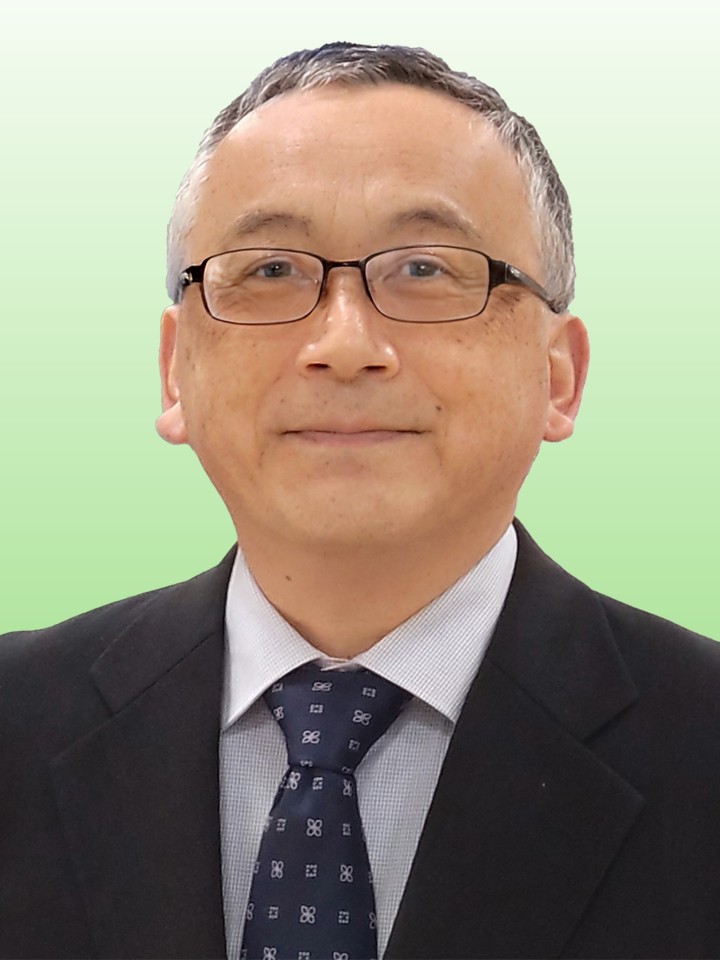
2025-26 President Naohiro GOTOH

WCOS2027 Welcome page
Select Lectures — Call for Submissions page
Professor, Tokyo University of Marine Science and Technology
Jan 2026
New Year’s Greeting from the President, 2026: Connecting the Future of Oleo Science through Industry–Academia–Government Collaboration
Happy New Year. I hope all our members welcomed the new year in good health and spirit.
Last year, the 63rd Annual Meeting of the Japan Oil Chemists’ Society (JOCS) was successfully held at Shinshu University under the leadership of Professor Toshiro Sakai. Many members and colleagues from both academia and industry, from Japan and abroad, joined us. The number of participants, as well as attendees at the social gathering, reached record highs. I would like to express my sincere gratitude to everyone who contributed to this great success. Personally, I was very encouraged by the enthusiasm and expectations for the future of oleo science that I felt through direct discussions with many participants at the venue. I hope we can carry this positive energy into this year’s annual meeting, which will be hosted by Professor Satoshi Ueno at Hiroshima University.
This year again, JOCS will emphasize “academia industry collaboration,” which has been our main theme in recent years. A unique strength of our society is the open exchange between academia and industry, from
basic to applied research. By making full use of this strength, we aim to bring research results into society, promote new technological development, and nurture the next generation of young researchers.
Looking ahead, the World Congress on Oleo Science (WCOS) will be held next year in Hakodate, hosted by Professor Masashi Hosokawa of Hokkaido University. This id an excellent opportunity for Japan to further
enhance its international presence in the oleo science field. We are currently working with many companies to prepare for this event, aiming to build a strong foundation for world-class research outcomes and human resource development. I also hope to include collaboration with the local community and regional resources in Hakodate as we move forward with preparations.
Another highlight is the steady growth of our journal, the Journal of Oleo Science (JOS). Its impact factor reached 1.8 in 2025, now exceeding that of related journals published by domestic societies and comparable to international journals in this field. This year, we aim for an impact factor of 3.0. I kindly ask all members to make active use of JOS in your research and development activities, and to cite JOS papers in your work. By doing so, we can further enhance the value of JOS, and showcase our progress to the world through WCOS, which I believe will greatly strengthen JOCS’s international standing.
At the same time, we must also improve the research environment. In recent years, researchers have faced difficulties such as increased administrative work, reduced funding, and aging equipment, which make it hard to fully concentrate on creative research. JOCS will continue to support young researchers by helping create an environment where they can pursue original ideas and long-term studies. We are also revising the textbook for the Freshman Seminar to make it more effective for learning basic knowledge, while inspiring interest in oleo science and supporting future researcher development. I am confident that such educational activities, carried out in cooperation among industry, academia, and government, will contribute directly to creating social value in our field.
In 2026, together with all members, we will continue to work with researchers, industries, and communities both in Japan and abroad, to further advance the Japan Oil Chemists’ Society. By strengthening our network across industry, academia, and government, we aim to become a society that contributes to solving the challenges of the future. I sincerely ask for your continued support and cooperation, and I extend my
best wishes to you for the new year.
May 2025
Greeting as the Newly Appointed President
I am Naohiro Gotoh and have been appointed as the President of the Japan Oil Chemists’ Society (JOCS) for the years 2025 and 2026 at the 71st General Meeting. It is a great honor to take on this important role, following President Okano, in a society with such a rich history and tradition. At the same time, I deeply feel the weight of this responsibility. I would also like to express my sincere gratitude to all the past leaders who have dedicated their efforts to supporting this society.
JOCS has long served as a place where researchers and engineers in the fields of oils, fats, surfactants, and related areas can exchange knowledge and create new values. It has contributed to the development of both academic and industry. While carrying on this tradition and foundation, during my term, I will make it my top priority to address the issues that became evident through my work with former President Okano and will work to promote our activities accordingly.
First, I aim to reorganize and update oil chemistry data from the year 2000 onward and make these findings widely available through the JOCS website or in printed publications. By doing so, we hope to make the recent advancements in oil chemistry research more visible to our members and society at large, allowing more people to appreciate the significance of this field.
Second, I will work on enhancing the standard methods for oil and fat analysis. Additionally, we will strive to register these methods with ISO to increase their international recognition. Fats and oils analysis is an essential foundation for both industry and academic research. Improving its accuracy and practicality, as well as ensuring that our standard analysis methods gain global recognition, will directly contribute to enhancing JOCS’s credibility on the international stage.
Third, I am committed to fostering the next generation of researchers and engineers. To further improve the Freshman Seminar, we will revise the dedicated textbook to help beginners to acquire knowledge more effectively. Additionally, I would like
to establish a system where young oil chemists receive multi-year research funding rather than just one-year grants, enabling them to develop unique and innovative research ideas. By creating an environment that supports the activities of enthusiastic young researchers, I hope to contribute to the sustainable growth of the oil chemistry field.
Finally, I aim to increase the impact factor (IF) of our academic journal, Journal of Oleo Science (JOS), to at least 2.0. In recent years, the IF has remained around 1.5. To establish JOS as a globally recognized journal representing the oil chemistry field, I believe we must raise this point to 2.0 or even 3.0 if possible. With the wisdom and cooperation of many researchers and committee members, I hope to achieve this goal.
To realize these initiatives, the understanding and support of our members, as well as many individuals from both industry and academia, are essential. Under the vision of JOCS as “a hub where scientists and engineers pioneer oleo science and support comfortable living”, I will promote flexible and organic collaboration while striving for the further development of our society.
I sincerely ask for your continued support and look forward to working together to build the future of JOCS. Thank you.
Articles of Incorporation of Japan Oil Chemists’ Society
Articles of Incorporation of the Japan Oil Chemists’ Society (JOCS)
Enforced on April 21, 2022
Chapter 1: General Provisions
Article 1 (Name): This organization shall be called the Japan Oil Chemists’ Society (abbreviated as “JOCS”).
Article 2 (Office): The principal office of this organization shall be located in Chuo-ku, Tokyo. Branch offices may be established as necessary. Regulations concerning branch offices shall be separately determined by the Board of Directors.
Chapter 2: Purpose and Business
Article 3 (Purpose): The Japan Oil Chemists’ Society (JOCS) strives to advance science and technology related to fats and oils, lipids, surfactants, and their related substances, and contribute to the development of industries and improvement of people’s life and health. Our Society conducts business both in Japan and abroad, aiming to foster international collaboration and promote global scientific exchange.
Article 4 (Business): The Society shall carry out the following projects in order to achieve the purpose of the preceding article:
- Public business of research results: organizing international conferences, the World Congress on Oleo Science, and publishing the open-access journal listed in DOAJ, Journal of Oleo Science.
- Human resources education, research incentives, and commendation of research achievements, including international awards and fellow appointments.
- Standardization and dissemination of evaluation/test methods, including international promotion.
- Regional academic promotion and dissemination projects.
- Revitalization of academic fields, including program design for the World Congress on Oleo Science.
- Other necessary projects to achieve the Society’s purpose.
The above business shall be conducted in Japan and abroad.
Chapter 3: Membership
Article 5: JOCS welcomes individuals, corporations, public research institutions, and groups from around the world. Membership categories include:
- Regular Members: Individuals, corporations, or groups supporting the Society’s purpose.
- Student Members: Students enrolled in universities or equivalent institutions.
- Asian Overseas Members: Non-Japanese nationals residing outside Japan.
- Asian Overseas Student Members: Non-Japanese students residing outside Japan.
Our Society conducts business both in Japan and abroad, striving to advance science and technology and contribute to global well-being.
Note: For the full text of Articles 6 through 51, including detailed provisions on membership, governance, officers, accounting, and dissolution, please refer to the downloadable PDF or continue reading below.
The 3rd World Congress on Oleo Science, WCOS 2027
“We are pleased to announce the launch of our official website for the international conference. On April 24, 2025, we opened the site with a welcome message from WCOS 2027 president Masashi Hosokawa. Stay tuned for the latest updates as we continue to share important information. We look forward to your participation!”
2023-24 President Tomomichi OKANO
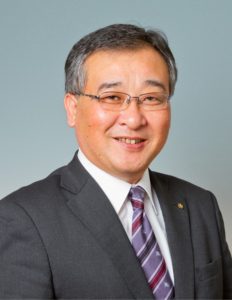
Executive Officer , LION Corporpration
January 2025
New Year’s Greetings: The Future of the Japan Oil Chemists’ Society -Things I Learned Through Direct Communication with Supporting Corporate Members-
Happy New Year! I wish to express my sincere gratitude to the many people who attended the 2024 Annual Meeting of the Japan Oil Chemists’ Society at Yamagata University in Yonezawa City last September under the leadership of Professor Nonomura, as well as to the more than 10 companies that provided support in various ways. Thanks to your support, the participant count nearly exceeded the maximum capacity for hotel accommodations in Yonezawa City, and the reception was so well attended that we had to turn some people away due to fire regulations. We would like to extend our heartfelt apologies to those who were inconvenienced and express gratitude to all those involved for their efforts.
In alignment with our efforts to “face the future”, which was set as our top priority when I took office as the chairman in 2024, I have convened with approximately 10 corporate member companies, together with Vice Chairman Goto and the secretariat. Despite many academic societies struggling with decreasing membership and income because of Japan’s declining population, the Japan Oil Chemists’ Society is fortunate to enjoy stable financial management for the time being. This is because approximately 70% of the income from membership fees comprises corporate membership fees; thus, if the benefits to corporate member companies are damaged, we fear a rapid deterioration in our financial situation. Therefore, we asked for the opinions of corporate member companies, who are important stakeholders, to deepen their understanding of the current situation and build a win-win relationship for the future. We are currently working on compiling a detailed report and specific measures as proposals, and we have received many ideas and suggestions. For example, in an age when the Internet is awash with both valuable and misleading content, I would like to consider such ideas as updating the handbook to ensure that it is a reliable source of correct information from a specialist’s perspective. I am also exploring ways to improve annual meetings and seminars to further stimulate human interaction across fields and generations.
Through discussions with several people, I believe that there may be things we can do to contribute to the improvement of the research environment for academia, which is the most important stakeholder for the Japan Oil Chemists’ Society. For example, since the implementation of the independent administrative agency system, the research environment at universities has experienced a marked increase in results-based evaluation and stricter management, along with a tendency for research to become shortsighted. The amount of stamina required to secure budgets and manage operations has increased dramatically, and I feel that the leeway that should be allocated to research and education, which are the organization’s original activities, has been reduced. Even if funding for academic society awards and other programs were changed from one-off rewards to multiyear grants, this might help create an environment in which young researchers could more easily take on unique and challenging research themes. Though not an easy task, simplifying the university’s administrative system—for example, by streamlining the back office-may enable the simplification of procedures and effective allocation of corporate donations and joint research funds to research sites. Although this suggestion is based on a small number of examples, because 30–50% of the costs are collected as administrative costs at many universities, companies that want to commission research at universities are becoming more cautious. Furthermore, as more than 10% of laboratories are operating on annual research budgets of approximately 1–2 million yen, young researchers are becoming exhausted.
The above are my personal opinions. If you have any opinions or suggestions, please feel free to let me know. I believe that the uniqueness and sophistication of Japanese activities are Japan’s strengths. I sincerely hope that the Japan Oil Chemists’ Society will become a frontrunner in realizing the activation and sustainability of research activities in Japan by giving form to the ideas and advice we have received from corporate members and academic teachers. We ask for your continued support this year as well.
Finally, I would like to announce that the 2025 Annual Meeting will be held at Shinshu University beginning September 3rd, under the leadership of Professor Toshio Sakai. Please join us.
January 2024
New Year’s Greetings: Contribution to the Future Made Possible by the Japan Oil Chemists’ Society
Happy New Year! Last year, I had the impression that social activities after the COVID-19 pandemic had begun in earnest, as the annual meeting was held at Kochi University of Technology in a face-to-face meeting for the first time in several years. Of course, virtual tools are convenient, but I am certainly not alone in reaffirming that encounters and activities where one can experience heat firsthand are very stimulating and meaningful. I celebrated my 60th birthday last summer, and looking back, I realized once again that I am here today precisely because I was blessed with so many encounters and was nurtured through the passionate interactions that I have had. I am entering 2024 with the intention of spending the last half of my life repaying this gratitude.
As I wrote in the preface to my inauguration as President of the Japan Oil Chemists’ Society, JOCS, I have set “facing the future” as my most important task as President. There are many angles and
visions for the future that we need to face, but “sustainability” and “wellbeing” are issues that are becoming increasingly important on a global level as well as in society. I believe that these future issues and JOCS have an extremely high affinity.
The history of interface science and surfactants, one of the major academic fields of JOCS, is also a history of resource utilization in accordance with the times. It started with soaps using fish oil and beef tallow as resources and rapidly developed during the period of rapid economic growth through the effective use of fossil resources. Since the 1990s, the development of biosurfactants and the utilization of plant resources have been actively pursued considering environmental compatibility and resource sustainability. In other words, the JOCS was one of the first societies to confront sustainability by bringing industry and academia together in the development of socially useful chemicals. Where JOCS should go in the future is not yet certain, but one possibility is to develop fully usable resources with food use, high CO₂ fixation efficiency, no residue, and the development of technologies that meet these conditions.
On the other hand, wellbeing is also closely related to our field of expertise at JOCS. Nutrition and redox control of natural oils and fats, another major academic field, are important technologies with high affinity. Of course, technological innovations in medicine and drug discovery are also important future technologies, but “knowing” and “preventing” will become increasingly important in dealing with health in a society of longevity.
The uniqueness of JOCS lies in the fact that it is a forum for a wide variety of players, from academia to corporations, in diverse academic fields to openly exchange information on a wide range of topics, from basic to applied, without creating barriers. This year, we would like to hear from many of our corporate and individual members and to conduct activities to increase our usefulness to all stakeholders. Furthermore, one of our hypotheses at this time is to further expand the aforementioned strengths. Specifically, we are considering “strengthening inter- academic collaboration to accelerate internationalization and interdisciplinarity,” “matching academia and companies in both technology and people,” “fostering human resources through seminars and exchange events,” and further “revitalizing science and technology by obtaining support from the government and other organizations.”
Many issues have been identified from various perspectives regarding the recent research environment for science and technology in Japan. In terms of human resources, issues related to the careers of degree holders and the decrease in the number of members of various academic societies due to population decline are major problems. In addition, in terms of research funding for science and technology, I feel that free research that encompasses unknown possibilities tends to be abandoned because of the concentration on competitive areas and the strengthening of exit controls based on an investment- return perspective. Corporate research is part of business activities, so we should be very conscious of return and speed; however, I am concerned that it is not the original form of academia to bind academic research with a single set of values and methods.
Let me reiterate that the JOCS is a society responsible for areas that have a high affinity with future issues, and it is a rare society consisting of a diverse and open membership. It is not easy to solve future issues, but with the help of our members, we would like to make improvements while prioritizing them. Thank you in advance for your cooperation.
Finally, under the leadership of Professor Yoshimune Nonomura, Chair of the 62nd Annual Meeting Organizing Committee, we are pleased to announce that the 2024 Annual Meeting will be held in person from September 3 to 5 at the Yonezawa Campus of Yamagata University. We look forward to your participation.
May 2023
Message from Our New President
At the 69th Annual General Meeting and 459th Board of Directors Meeting, I was honored to be appointed president in the 2023 fiscal year. Although I am very uncertain whether an inexperienced academic from the industry will be able to fulfill this great role, I will do my best to face the future of the historic the Japan Oil Chemists’ Society (JOCS), with the weight of responsibility as the first president from industry in the 23 years since 2000. We look forward to your continued advice and encouragement.
The first thing we need to do in the future is to create new forms of academic conference activities, given that the novel coronavirus pandemic, which lasted for more than three years, is finally calming down. The impact of behavioral and face-to-face restrictions on the activities of academic societies was by no means small, and many important events had to be cancelled, curtailed, or held differently. However, we have also gained from this experience. The 2nd World Congress on Oleo Science, WCOS 2022, held in August last year, took advantage of the web conference feature and successfully concluded with not only many research reports from Japan, but also many programs including the new attempt of “Select Lectures,” the JOCS-AOCS joint meeting held in collaboration with the American Oil Chemistry Society (AOCS), the International Society for Fat Research Lectureship Series, and many other programs that were prepared and successfully completed. Nevertheless, one of the important roles expected of the conference is networking and deepening academic discussions. Taking advantage of online convenience and cost advantages, the 61st JOCS Annual Meeting in 2023 will be conducted face-to-face for the first time in four years so that these original functions can be fully realized. The people concerned are also devising ways to hold the reception, considering the social situation at the time. We look forward to your active participation. Similarly, we plan to continue holding various seminars and events, making full use of both real and digital media.
Another important issue for the future is to reaffirm the raison d’etre of JOCS to all the stakeholders that make up the society and to strengthen the sustainability of the association by creating a clear roadmap without neglecting difficult challenges, such as declining membership and financial pressures.
The Journal of Oleo Science (JOS), the flagship international journal of JOCS, has been included in the Directory of Open Access Journals, and the impact factor of JOS was also improved to 1.628. One of the strengths of JOCS is its broad base as an academic field, which has developed based on fats, oils, and interfacial science, and its high realization capability that exists on the same platform, from basic to applied technology. We believe that these are important tools for exploiting this advantage. In addition to accelerating internationalization by actively reaching out to AOCS and researchers in Asia, I would like to take the lead in transforming the way we work with other academic societies, as efforts that seamlessly straddle academic domains, especially health- and environment-related fields, will become mainstream in the future.
JOCS is also characterized by a high proportion of companies and corporate researchers in terms of both membership and financial composition. In the rapidly changing business environment of the future, the usefulness of the society for companies is expected to change significantly. Although this may not be appropriate, it may be necessary to seek a form of academic society with a high investment value. We would like to have a dialog with a wide range of people on this point and attempt a design, albeit in the short term.
I have been a member of JOCS since I was a student more than 30 years ago. I am grateful for the guidance I have received from many senior members of society, which has made me who I am today. I see my appointment as an opportunity to return the favor and I will continue to work to this end in the future. Thank you for your understanding and cooperation.
License Terms

CC BY 4.0(Attribution 4.0 International). This license allows users to share and adapt an article, even commercially, as long as appropriate credit is given.That is, this license lets others copy, distribute, remix, and build upon the Article, even commercially, provided the original source and Authors are credited.
CC BY-SA 4.0(Attribution-ShareAlike 4.0 International). This license allows users to share and adapt an article, even commercially, as long as appropriate credit is given and the distribution of derivative works is under the same license as the original.That is, this license lets others copy, distribute, modify, and reproduce the Article, provided the original source and Authors are credited under the same license as the original.
Checks for Plagiarism
Submission to the journal implies that the manuscript is original work. The journal may use Crossref’s Similarity Check plagiarism software to screen manuscripts for unoriginal content. By submitting a manuscript to the journal, authors agree to this screening. Any manuscript with an unacceptable level of unoriginal material may be rejected or retracted at the Editors’ discretion.
Anonymous peer review
Anonymous peer review
The journal maintains the confidentiality of all unpublished manuscripts. Editors will not:
a) disclose a reviewer’s identity unless the reviewer makes a reasonable request for such disclosure
b) discuss the manuscript or its contents with anyone not directly involved with the manuscript or its peer review
c) use any data or information from the manuscript in their own work or publications
d) use information obtained from the peer review process to provide an advantage to themselves or anyone else, or to disadvantage any individual or organization.
Reviewer confidentiality:
As part of their responsibilities, reviewers agree to maintain the confidentiality of unpublished manuscripts at all times. By accepting the invitation to review a manuscript, reviewers agree not to:
1)disclose their role in reviewing the manuscript
2)reveal their identity to any of the authors of the manuscript
3)discuss the manuscript or its contents with anyone not directly involved in the review process
4)involve anyone else in the review(for example, a postdoc or PhD student)without first requesting permission from the Editor
5)use any data or information from the manuscript in their own work or publications
6)use information obtained from the peer review process to provide an advantage to themselves or anyone else, or to disadvantage any individual or organization.
Waiver Policy
Waivers to APCs are provided automatically when the corresponding author is from a “Group A” Research 4Life country. In cases of demonstrated financial hardship, the journal will consider a pre-submission application for a waiver from any corresponding author to jos@jocs-office.or.jp. Applications cannot be made after the peer review process has begun. The ability of an author to pay the APC does not influence editorial decisions. To avoid any possibility of undue influence, Editors involved with the decision-making process for articles are not involved in any deliberations on waivers.
Article Processing Charges (APCs)
There are many costs associated with publishing scholarly journals, such as those of managing peer review, copy editing, typesetting and online hosting. To cover these costs in the absence of journal subscriptions, authors(or their representatives)are asked to pay article processing charges(APCs). There is no submission fee. The journal charges are as per the table below for all article types. Authors of accepted manuscripts will be invoiced for the APC before publication of their manuscript.
| APCs for the Journal of Oleo Science including relevant consumption taxes (JP Yen) |
||
| Member | Non-member | |
| Article ≤ 8 printed pages | 60,000 | 100,000 |
| Article >8 printed pages | Additional 2,000 / page | Additional 4,000 / page |